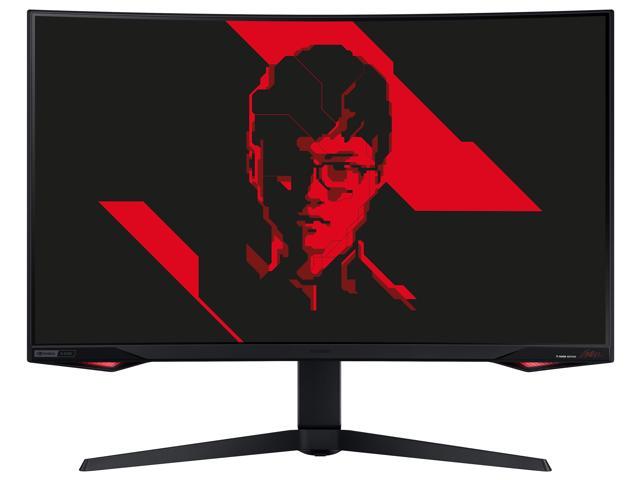
Both your graphics card and monitor support G-Sync, which is nVidia's adaptive sync technology that was designed to give you a smoother gaming experience with lower input lag.
When your fps drops too low you are likely to experience screen tearing and/or stuttering, G-Sync can resolve these issues.
When your fps goes above your monitor's refresh rate, then G-Sync will stop trying to sync the GPU and monitor, because your screen simply can't keep up. This is where a faster monitor can help you and at 240hz your monitor will be faster than what you would expect to get in terms of output from your GPU.
For me the ideal monitor would be a 27", 2560x1440, G-Sync/Freesync monitor with at least a 240hz IPS panel, but something like that is not something that I can justify spending money on at the moment. If you are looking at a new monitor then that is what I suggest you use as your main criteria.
nVidia are now on their second generation of G-Sync processors, so unless you are planning on getting a AMD GPU in the next few years get a dedicated Freesync panel, if you're planning to stick with nVidia then get a G-Sync panel.
G-Sync is available in 3 ways:
- G-Sync Compatible - has no nVidia processor but has been validated by nVidia to work variable refresh rates for tear/stutter free gaming, this is what to expect on some Freesync panels.
- G-Sync - This has the original G-Sync procressor to deliver gaming with no tearing, stuttering and input lag.
- G-Sync Ultimate - Also delivers a lifelike experience with support for HDR, stunning contrast, cinematic color, and ultra-low latency gameplay.
Make sure you check out plenty of reviews, personally I would look at Hardware Unboxed on YouTube for monitor reviews, they are thorough and come across as impartial so I believe they can be trusted.

 Greetings, Devil Dog! Welcome to the Call of Duty Forums. It looks like you're looking forward to Call of Duty: Modern Warfare 4, but haven't created an account yet. Why not take a minute to